Friday, January 1, 2016

Christmas in the Galapagos

We sailed overnight to Isla Espanola.  In the morning we went ashore and took a long hike across the island.  Today was the first day that we saw the famous Galapagos birds up close and personal.  I'm not sure how Darwin managed to catch finches; they are so small and quick.  But the sea birds are large and quite easy to see when they are sitting.  Today we walked by their nesting site and saw hundreds of birds sitting on their eggs or their new babies.

Image result for galapagos birds nests

I have forgotten the name of this bird, but it lays two eggs five days apart.  After the chicks hatch, the older one kicks the younger out of the nest to die, but if there is something wrong with the older chick, the younger one kicks him out.  In this way, the parents ensure one healthy chick.  We saw the last albatross sitting on her nest as all the others had already flown away.  On the beach we saw sea lions, sea iguanas, and the Galapagos crabs which are bright red.

Image result for galapagos crabs

After our hike, we suited up and went snorkeling again, and again it was incredible.  The sea lions just swam in circles around us.  They gracefully rotate, swimming right side up and then upside down.

After lunch we came back ashore to visit the sea lions on Gardner Beach.   They live in pods and just hang out on the beach.  There were lots of pups and they are just as cute as puppies.


After lunch the crew put up the sails for the first (and it turned out, only) time.  We still motored, but it looked like a sailboat.  By the way, our Beagle is only ten feet shorter than the Beagle that Darwin sailed in (without a motor) for five years.  While we were sailing, a large group of dolphins and whales swam by, jumping in unison alongside us.

My roommate, Sylvia, and me enjoying the afternoon sail.
We sailed all afternoon, enjoying the sun and the rest.  Late in the afternoon, we reached San Cristobal, another inhabited island.  We didn't go ashore, but most of the crew did so they could visit their families for Christmas.  Our cook, Pedro, had spent all afternoon fixing us a feast of turkey, stuffing, potatoes, and the fixing.  We never bothered telling the crew that eight of the twelve guests did not celebrate Christmas.

A Christmas toast
If you had asked me before this trip how interested I was in bird, I would have shrugged, but birds were the highlight of Christmas day, and we were all excited to see the three most famous Galapagos varieties.  First, we saw the red footed boobies with their  blue beaks, and then we saw the blue footed boobies, the symbol of the Galapagos with their unbelievably bright blue feet.  I had seen one in flight a few days earlier, but today we saw them on the rocks right in front of us.

Image result for galapagos red footed boobiesImage result for galapagos blue footed boobies

Pretty amazing.  I had seen a National Geographic show about frigate birds mating but wasn't sure it was the right season.  It was.  The males have a bright red sack that hangs down below their beaks.  When they are ready to mate, they blow it up to an incredible size.

Image result for galapagos frigate bird


Birds nesting for as far as you can see
Of course, birding was not our only activity.  We had a nice siesta on board while sailing to Isla Lobos, and then we snorkeled again with the fish, sea lions, and the biggest sea turtle I had ever seen.

Wednesday, December 30, 2015

More tortoises and those crazy Germans

During the night we sailed to Floreana Island from Santa Cruz Island.  Floreana is another of the few populated islands in the Galapagos, although only a few dozen people live here.  There is a mailbox near the landing where the whalers used to leave mail, and kind sailors returning to the US would pick up the letters and mail them once they reached land.  The mailbox is still in use although one never knows if the mail will be picked up and if it will be delivered.

It was sprinkling as we hiked up a muddy path to a tortoise enclosure.  They move surprisingly fast when they want to, but mostly, they just hang out.

Image result for galapagos islands tortoises

Isla Floreana is relatively flat and is one of the few islands to have fresh water, so various settlers have tried to farm here.  At one point, Floreana was a prison colony but apparently that didn't work out so well.  Go figure.  But beginning in 1929 some German settlers came who were - not to put too fine a point on it - nuts.  The first two were a couple who were each married to someone else.  Looking for the good life, before they left Germany they had all of their teeth pulled out.  He was a doctor and did not want to have to deal with dental problems.  Well, that's one approach.  Also, they had decided to become vegetarians so who needs teeth?  They wrote letters that were highly publicized in Germany so others followed including a woman who said she was a Baroness.  I got very confused by all the names but there was a lot of partner switching, some mysterious disappearances, and maybe murders.  And the original crazies who had all of their teeth pulled ... she went back to Germany and he died from eating pork!  Guess that vegetarian thing didn't work out so well.

We visited the small museum on the island maintained by the descendants of one of the German families.  It was more interesting than one would expect.

Back to the wildlife ... in the afternoon we had our first snorkeling excursion at Devil's Crown, one of the best dive spots in the Galapagos.  It was amazing.  The water was so calm and clear.  There were more tropical fish than I have seen anywhere except Hawaii.  Huge schools of beautifully colored fish swimming all around us.  Periodically turtles or sea lions would swim with us as well, and we saw a few small reef sharks, too.  Several of our group took these pictures with their underwater cameras.


After snorkeling, we went for a walk on Punta Cormorant, one of the loveliest beaches here.  We turned a corner and saw a flock of pink flamingos.

Image result for galapagos islands floreana

Image result for galapagos islands floreana

Then we came to a beach where the giant sea turtles lay their eggs.  They waddle up the beach, dig a hole by flopping around, lay their eggs, and then waddle back into the ocean.

Image result for galapagos islands sea turtles

They sure have an odd mix of wildlife here.


Welcome to the Galapagos

It does take a long time to get to the Galapagos.  This is not for the faint of heart.  First, an hour and a half flight from Guayaquil.  I sat next to a man with his three year old son.  You are a brave man, I said.  Oh, I'm traveling with my wife, two other children, and the two nannies.  I guess that is not so difficult after all.  In the category of "you meet such interesting and unusual people when you travel" ... he was a native of the Galapagos which makes him unusual right away.  He now owns a hotel on the islands, but met his Israeli wife back when he was a guide.  They talk to each other in English because originally that was their common language.  So their eight year old daughter and twin three year olds speak Spanish, Hebrew, and English.  Coincidentally, those are my three languages, but those three year olds already speak better than me, at least in two of the languages.

Image result for galapagos islands

We landed on Baltra Island which is that little speck just above Santa Cruz Island in the middle.  The airport was built by the US during WWII.  We are at the end of the dry season, so it has not rained in six months.  Everything is brown, dry, and scraggly.  It just looks like dead brush but our guide keeps reminding us that it will all be lush and green in another month.

From the airport, we took a ten minute bus transfer to the dock and a ferry across the channel to Santa Cruz.  Then a one hour bus across Santa Cruz to our starting port of Puerto Ayora.  So the first thing I learned is that these islands are way bigger than I imagined.  Later I would learn that the distance between islands is also bigger than I expected.  Santa Cruz is a typical volcanic island, so crossing it meant going over the mountain.   Along the way, we saw our first giant tortoises, so we had to stop for our first pictures.


 At Puerto Ayora, we took a zodiak (called a panga here) to the Beagle, finally arriving onboard late in the afternoon.   Since we are in a Spanish speaking country, Beagle is pronounced Bee-glay.

We took the panga back into Puerto Ayora to tour the Charles Darwin Research Center.  It turns out there are two species of giant tortoises in the Galapagos.  One has a dome shaped shell.  The other eats from trees, so its shell is high in the front and it has a very long neck.  It is a very bizarre looking animal.

Image result for galapagos islands tortoises

When the Spanish first arrived here, they thought the shell looked like a saddle, so they called it galapago - the Spanish word for saddle.  Thus ... Galapagos Islands.  Who knew?

More "everything you always wanted to know about tortoises but were afraid to ask" ...  Tortoises are land animals.  The giant tortoises here have legs that look like elephant legs.

Image result for galapagos islands tortoises

Turtles swim in water and have flippers.  And terrapins live in brackish water.  Who knew?

In an unfortunate (for the islands' economy) bit of timing, our time in Puerto Ayora was our only chance to buy souvenirs, but how can you buy anything before you know exactly what you are going to see.  I was hoping to see blue footed boobies - their feet are an amazing bright blue - and frigate birds with their bright red sacs inflated, but would I?  Who knew?  I took a chance on a few post cards and magnets.

Finally, back on board, I got acquainted with my shipmates for the week.  A family from Miami with three sons in their twenties, a Dutch couple with their thirteen year old daughter, a young Chinese couple on their honeymoon, and my roomie - a German woman who has lived in the States for a dozen years and now lives in San Francisco.  And our guide is Rissel, another third generation Galapagos resident.


Monday, December 21, 2015

Guayaquil

I arrived in Guayaquil late on Friday after a looong day of travel, and had a few days to settle in before going to the Galapagos.  It is hot, humid, and uncomfortable here ... and I am loving it.  Goodbye, Sacramento winter.

I thought about taking a tour to orient myself to Guayaquil, but although it is a large city, it was not hard to walk around by myself.  On Saturday, I headed for the malecon (river walk) and joined the weekend throngs in strolling.

Resultado de imagen para guayaquil turistico

Then I headed back into the city where I discovered that the traffic is terrible - complete gridlock.  Walking looked better and better.

Like most Latin cities, there is a cathedral with a park in front.  But this park is a bit unique as it is inhabited by land iguanas.


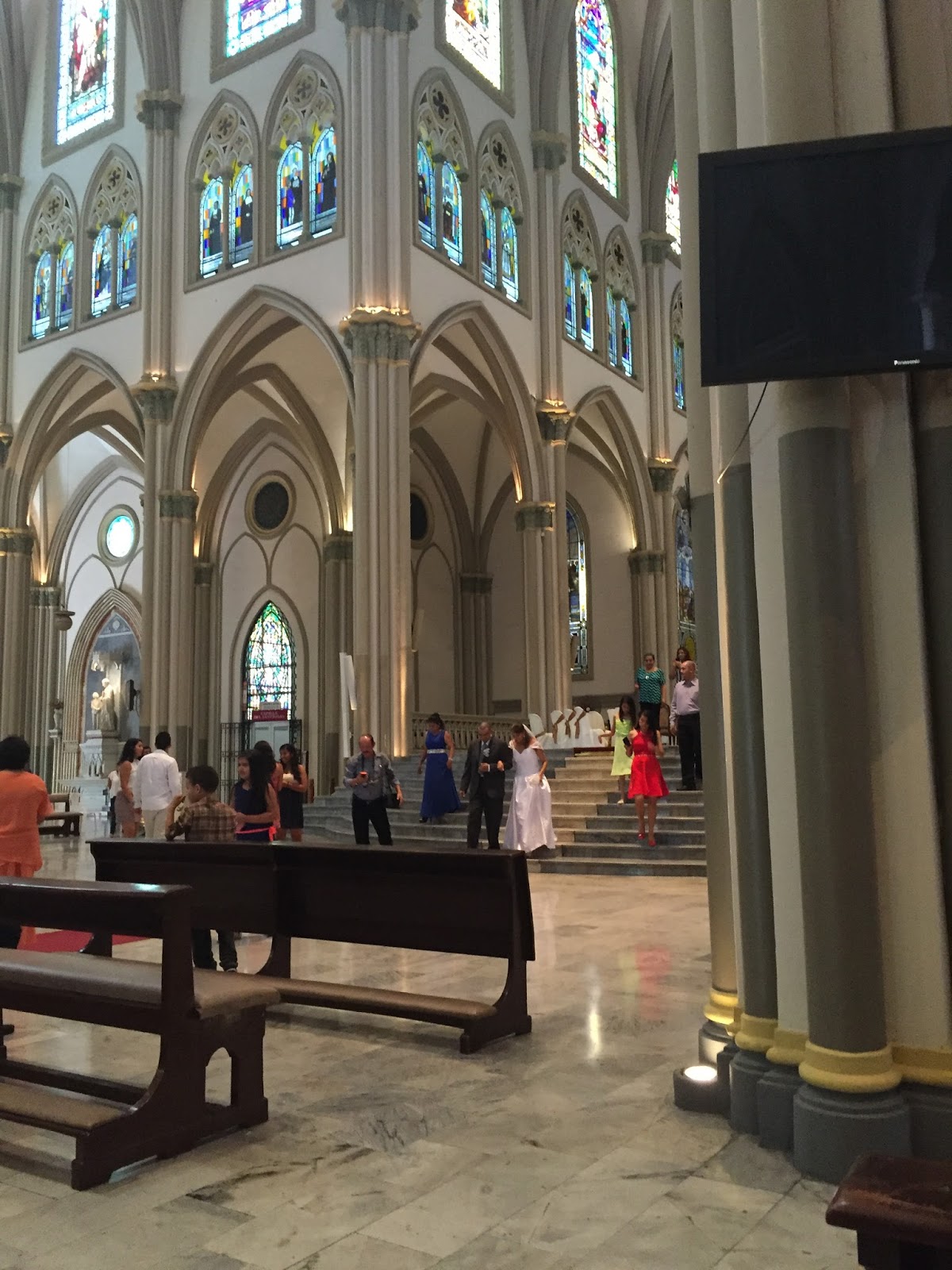
It was a busy Saturday in the cathedral.  First I attended a wedding and then a christening.  No food served, unfortunately, so I wasn't much of a wedding crasher.


Then it was back to the malecon where Pepsi is sponsoring Christmas.  Besides the giant tree, there are food booths, rides for the kids, and several nativity scenes.  Papa Noel (Santa) sits on a stage wearing a blue suit.  Children sit on his lap and their parents take pictures.  No need to pay Santa's elves for the privilege of a picture.  Of course, Pepsi sponsors Santa as well.  The sign says:  De: Pepsi, Para: Ti.  From Pepsi for you.


At night there was a parade with floats and dancers.  I'm not sure that I have seen a nighttime parade before.  All of the floats were decorated with lights, as were the dancers and musicians.  The streets and buildings here are not decorated with Christmas lights, but the parade was a moving Christmas light show.  The first float, of course, was a manger scene, but then they got pretty creative:  white Christmas with Frosty, the Polar Express, Snow White and the Seven Dwarfs, and Peter Pan.  They must have some different traditions here.  I do hear all the "traditional" Christmas songs such as I'm Dreaming of a White Christmas, Jingle Bells, and Frosty the Snowman.  It never ceases to amaze me how the concept of snow at Christmas time has taken over, even in warm climates.

On Sunday I headed in the other direction on the Malecon.  First I visited the Guayaquil Miniature Museum where I learned the history of Guayaquil.  More interesting than I would have thought, and a good Spanish lesson as I read all of the explanations in Spanish.  Sometimes I cheated, however, and listened to the English narration.  The most disturbing thing that I learned:  The Spanish headed for Quito and the mountains because they wanted gold and silver.  Guayaquil on the coast was a backwater - poor and subject to constant raids from pirates.  The worst raid was carried out by a pirate named ... wait for it ... Picard.  Say it ain't so, Jean Luc.  What was Gene Roddenbury thinking?

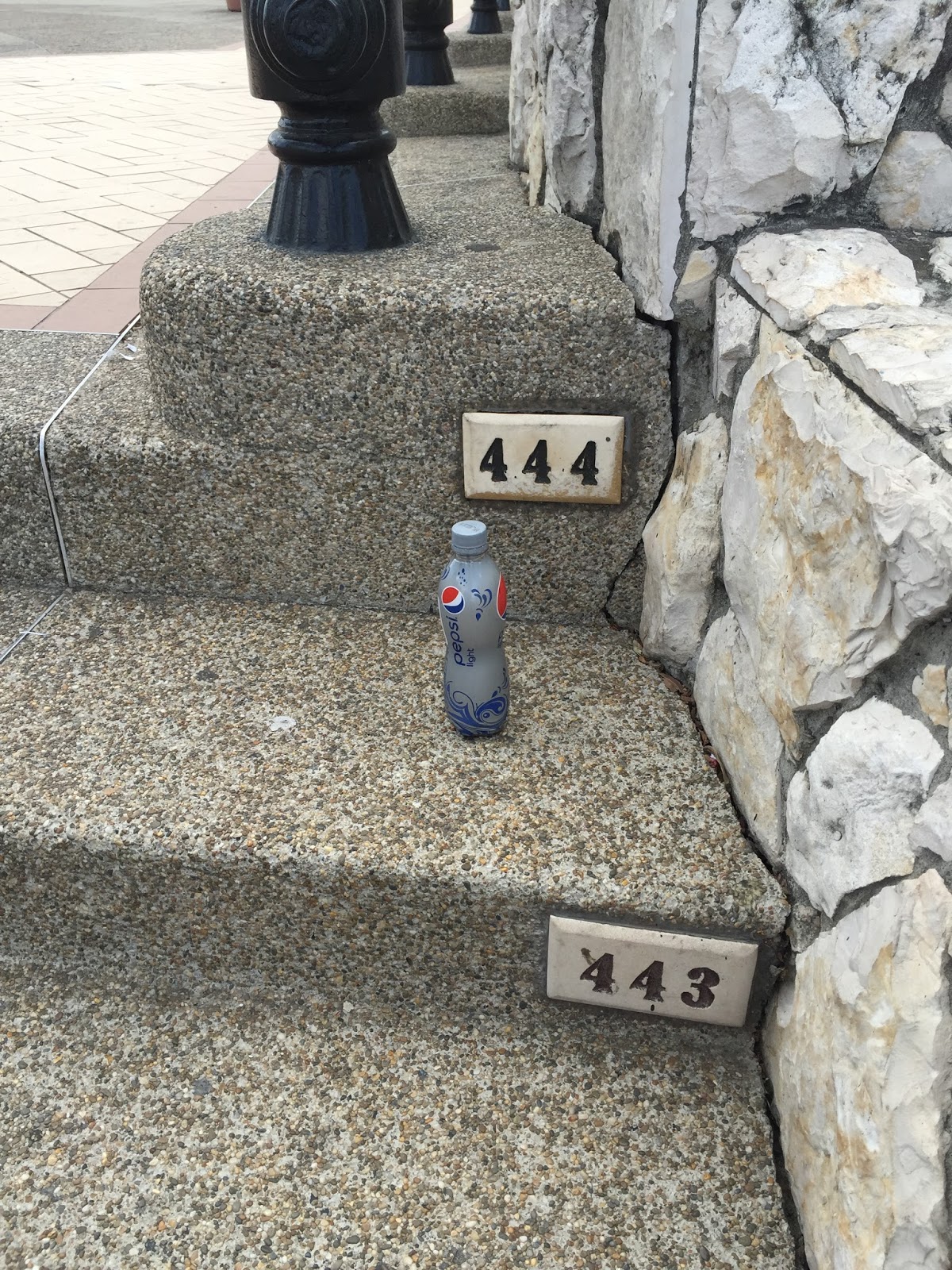
Then I headed for Cerro Santa Ana (Santa Ana Hill) with its colorful buildings and lighthouse on top with 360 degree views of the city.  There are 444 steps to the top, helpfully numbered so you know how far you have to go.  The numbers are for everyone, but the Pepsi Light (South American DP) is all mine, although at only 400 ml, it is barely a sip.  And the 444 does not count the 50 steps to the top of the lighthouse.  I had to count them myself.  Apparently Cerro Santa Ana used to be a pretty sketchy neighborhood, so now there are security guards all along the route.  There are also benches conveniently placed at frequent intervals.  All in all, a very pleasant walk and view.

Image result for guayaquil cerro santa ana


And that was Guayaquil.  Today I waded into the crowded local markets to pick up a few last minute things, and tomorrow morning I am off to the Galapagos.